Saturday, 19 October 2024

Postcard from...Tsuruga, Fukui

Northern Japanese Alps, from Toyoshina station
I took a detour recently to knock off a couple of bucket list train trips.

Firstly, I wanted to ride the recently extended Hokuriku Shinkansen all the way around the north coast to its new terminus at Tsuruga...and ideally explore that corner of Fukui and the northern coast of Kyoto. Unfortunately, that part of the coastline will have to wait for another visit, I think by car, given the relative inaccessibility of the area & the less the less than easy to get to places I'd really like to explore, around Wakasa Bay, without having to rush to make connections.

The earliest Shinano from Matsumoto was a beautiful autumnal sunrise ride, the Northern Alps beyond Azumino to the left (west) before the Chikuma valley appeared after the tunnels either side of  sleepy  Omi/Hijiri-kogen. And what an appearance - spreading out to the north with Nagano city sprawled in the middle. A fairly unique train journey given the climb the line makes to cross from Shinshu to Chikuma (the two geographical & historical halves of modern Nagano prefecture).

If you want some anorak information about Shinano click here and for the route, here

JR East E7
From Nagano you won't get much of a view, as the line carves through a number of tunnels at light speed - this train really does get a shift on. Super smooth, and before you know it you're cutting the corner of Niigata prefecture and decelerating into Toyama with the Sea of Japan on your right already. Eyes left (south) for a stunning mountainscape. This part of the line, openned in 2015 is extremely swift!

Our shinkansen slows down after Kanazawa, dropping south through Ichikawa & Fukui prefectures with fewer and fewer passengers. This stretch of line only openned in March this year (2024); Tsuraga obviously not the final intended stop. I am sure, once the final leg is finished to Osaka (in another 20 years' time?) the route will open up the region - and not soon enough - the Noto peninsula desperately needs better transport access & investment to recover from the hammer blows of earthquake & typhoon damage this year.


Kagayaki: Tokyo–Tsuruga, limited-stop service, since 14 March 2015
Hakutaka: Tokyo–Tsuruga, mostly all-stations service, since 14 March 2015
Tsurugi: Toyama–Tsuruga, mostly all-stations shuttle service, since 14 March 2015
Asama: Tokyo–Nagano, mostly all-stations service, corresponding to existing Nagano Shinkansen service introduced in 1997

Follow the yellow (or blue!) brick road
And what of Tsuruga? No time to explore the town but just enough to find a nest of Thunderbirds, the aged limited express that used to service the line up to Kanazawa from Osaka/Kyoto, hugging the shore of Lake Biwa. The views of the lake are limited, unfortunately, especially if you are not sitting by the window & cannot keep the curtain up. My fellow foreign travellers glued to games on their phones/and ignoring the historic sites across the water. Really, really frustrating ignorance (and your enormous suitcases are even more annoying).


Familiar limited express rolling stock (JR-West 683-4000); comfy enough but looks & feels 'tired'...good enough for my needs and the relatively short trundle to Osaka - the non-shinkansen line from Kyoto taking a little more time, but divested of the tourons a chance to enjoy the suburban corridor. No rush!

Kissing Thuderbirds, Tsuruga station
I'm glad I made the effort to sweep around the "Hokuriku Arch" - an area begging to be discovered more slowly. There is a rail pass for this region that would be good value & allow travellers to stop over & linger for a whole week. Inner trainspotter satisfied!

Thursday, 19 September 2024

Postcard from...Berlin, Germany

Berlin sights & cold beer

 Dear Jim sensei,

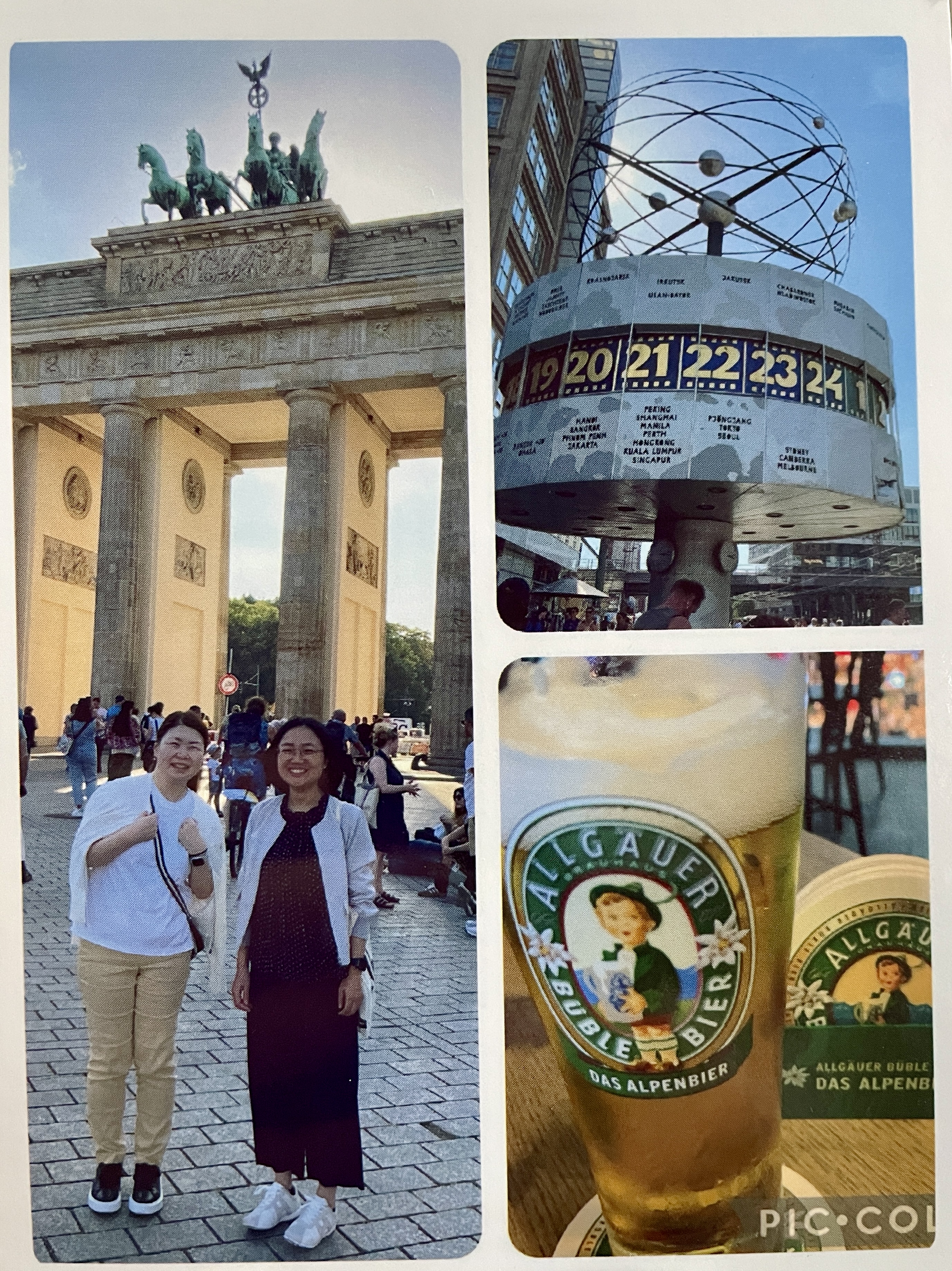
We stayed in Berlin for three days. We walked around the city to see some historical buildings. 15K+ steps per day!

It was hot and sunny, which was perfect weather to have cold beers :)

Reiko & Tomoko


Wednesday, 18 September 2024

Postcard from...The British Museum, London.

The British Museum

 Hi Jim sensei,

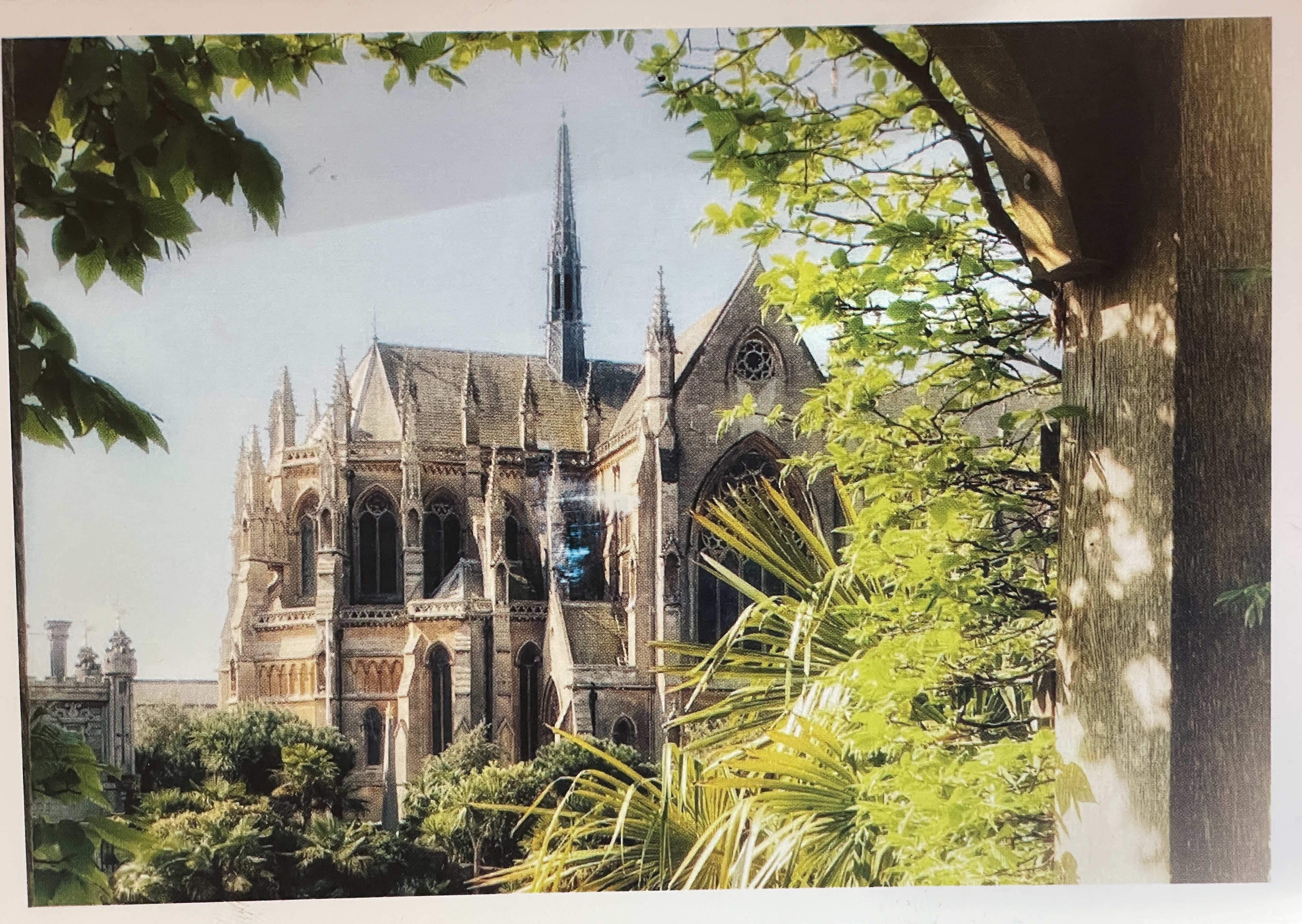
We had a chance to visit The British Museum. It was so interesting to see objects from the ancient period. We were lucky to have sunshine earlier today! (Beautiful picture isn't it?) The temperature is much lower than that in Berlin. It was like late autumn.


Tomoko & Reiko

Monday, 9 September 2024

An itinerary a trip

 Day 1: Arrival in Edinburgh

Arrive in Edinburgh: Transfer to the hotel, and then leave my baggage there.

Edinburgh Castle: Explore this historical place. I’ll rent an audio guide because it is available in Japanese. Visit to Edinburgh castle from Royal Palace and Honours of Scotland to Mons Meg and the Scottish National War Memorial. 

I’m sure that the place will make me exciting, so I need a rest to go around the castle. Take afternoon tea break. (I’ll make a reservation for tearoom in the castle.)

After enjoying Edinburgh Castle, I’m going to the Royal Mile to see historic street, visiting shops and landmarks. 

At dinner time, I’ll eat Scottish cuisine at a local restaurant. I’ll enjoy beer and scotch during meal.

Day 2: still in Edinburgh

I’ll tour for Holyrood Palace where the official residence of the British monarch in Scotland.

Also, I’ll visit at the National Museum of Scotland. I’ll look at Scotland’s history and culture from exhibits.

At Dinner time, I’ll try a cozy pub or restaurant in the Old Town.

Optional: Attend a traditional Scottish Ceilidh dance.


Day 3: still in Edinburgh

I’ll go to ST GILE’s cathedral. I’ll try to join guided walking tours which is are free. (I hope to understand what guide saying)


Day 4: Loch Ness

I’ll visit the Loch Ness Centre and Exhibition. 

I will enjoy a boat tour on the loch to search for the famous monster. 

Fairy Pools: Hike to these beautiful natural pools.


Day 7: Return to Edinburgh

Morning: I’ll eat breakfast at the hotel.

The Edinburgh Dungeon: Scarry!! I don’t know whether I enjoy there.

Final Shopping and Sightseeing: Shopping souvenirs. 

Departure: Go to the airport for my flight to home.


Sunday, 8 September 2024

Nobel Peace Prize winner - Barack Obama

The Nobel Peace Prize winner I'd like to introduce is Barack Obama. He was once the president of the United States of America. Also, he was different from previous presidents in that he was the first Afircan-American, person of color, and Hawaiian-born president.

Although he was once out-ranked by former First Lady Hillary Clinton in terms of name recognition, his skillful speeches and charisma attracted people, and he gained supporters as he continued to campaign.

While his policies are criticized for lacking specificity and being largely abstract & idealistic, his speeches have been described as the reincarnation of John F. Kennedy for their persuasiveness. In his speeches, he employs a technique of layering short phrases with frequent use of "we" and "you". In particular, two phrases "Change" and ""Yes, we can" were frequently used as catchphrases during the election campaign.

He was awarded the Nobel Peace Prize in 2009. All media reports cited Obama's diplomacy as a victory for the prize, due to his vision of promoting international cooperation toward nuclear abolition, which he announced in Prague in April 2009, and his call for reconciliation and dialogue with the Islamic world, which he made in Cairo in June.

However, if we see only Obama's diplomatic ideals as the driving force behind his Nobel Prize, we are only seeing half the truth. There is another half which is not clear from the surface. That is the change in the US's security strategy that took place in the 2000s. behind this Nobel Prize lies the foundation of the cold, realistic US's security strategy, which is the globalisation of the use of advanced conventional warheads and the promototion of nuclear non-proliferation. 

Furthermore, Obama's visit to Hiroshima. the first by a sitting US president, was an historic opportunity of great inportance to commemorate the war dead and to revive international momentum toward a world free of nuclear weapons. At the same time, it symbolized the strength of the US - Japan alliance, an "Alliance of Hope", that has been built up over the 70+ years since the end of World War Two.

Posted for Eleanor

Wednesday, 4 September 2024

A Nobel Laureate I admire - Mother Teresa

I would like to introduce about Mother Teresa.

Her real name was Agnes, and she was born in Skopje, in the Republic of North Macedonia.

When she was eighteen years old, she wanted to go to Bengal, India. That year, she was named Teresa as a nun, and she taught about monasticism to poor people.

Teresa decided to work in the slums of Calcutta, and she went out the monastery when she was 38. After a while, she collected the poor children who can’t go to school, and she opened air -classes at the slum in Kolkata.

In 1950, she moved to her nationary to India, and built monastery, school, hospital and so on. Many people thought wonderful that Teresa’s action. Finally, In 1979, she won the Nobel Peace Prize.

Posted for Youna


Wednesday, 28 August 2024

Japanese WWII battleship "Shinano"

What do you imagine when you are asked name of battle ships you know at WWII? I think many people answer Yamato. However, the largest battleship was Shinano at that time it was built.

Shinano, which had displacing nearly 72,000 tons at full load, was built as sister battleships of Yamato. Since a main aircraft carrier of United States Pacific Fleet at that time was 24,000 tons, you can see how Shinano was huge. It had overwhelming military power and thick/sturdy armor for defensive, that was gathered well-technologies of Japan. Although it was not perfect, the construction was initially completed on November 19, 1944. In order to avoid damage from air attack, it was decided to move the battleship from the port of Kanagawa to Hiroshima. However, U.S. Navy found Shinano and they torpedoed it too easily on November 29, 1944. It was just ten days from completion of construction.

Japan’s military power was already exhausted. In addition, at a time when there was no longer dependent on a huge battleship, Shinano sank in the sea without showing good performance. Therefore, the large battleship was not remembered by people.


Tuesday, 27 August 2024

Wildlife in Japan

 Japanese Serow

They eat plant leaves, tree barks, and fruits etc. They can be seen in mountains in early spring and late autumn. They are protected as a special natural animal by Japan and are also the prefectural animal of Nagano. Climate change causes animals in mountain that they are unable to secure enough food, and recently deer sometimes enter in area where Japanese Serow lived to find foods. It is likely to drop the population in the future again.

Japanese monkey (Macaca fuscata)

They can be found in not only countryside but also urban area because they operate in groups and not afraid of people. They are active during the day, and eat tree buds, fruits, and vegetables as well as small animals. At night, they sleep in safe places such as trees.

Japanese squirrels

They are active in the mornings and evenings, and can move swiftly even in the trees. Their summer fur is reddish brown, while their winter fur is gray-brown. They eat acorns, insects, and small bird eggs. They store nuts etc underground before winter starts, and dig them to eat during winter because they are non-hibernating.

Cuculus canorus

We can hear their chirp “Ka-kko” in Summer in Japan. Their body is approx. 35 cm and have head, back and upper feathers in gray, and belly in white.

It is famous for a summer bird in Japan and can be found everywhere in Japan. You can easily find them in central and northern Honshu. In Europe, it is famous for a bird that heralds spring. They spend winter in Africa and Southern Asia. By eating mainly caterpillars that other birds won't eat, they have an advantage to secure foods more than other birds.

Bush Warbler (Horornis diphone)

Bird called “Uguisu” is famous for a bird that heralds spring. We can hear their chirp “Ho-hokekyo” everywhere in Japan but have less opportunity. Even if we hear their chirp, it is difficult to find the bird because they keep watch for natural enemy. In the summer, they mainly eat small insects, larvae, and spiders, and in the winter, they eat seeds and nuts.

Ptarmigan (Lagopusu Muta)

Lagopusu means “Long-haired rabbit’s foot”. They live most of year in alpine belt and are the strongest bird in cold atmosphere. Their feathers turn whole white in winter to be a part of snow mountain. In spring, the upper part of male feathers is blackish brown and the one of female is mottled with light and dark brown. In autumn, their upper part of feathers turns gray-brown. Their inside feathers are white in all seasons.


Sunday, 25 August 2024

Important scientific discoveries - DNA: The Blueprint of Life

Deoxyribonucleic Acid ("DNA") is the main unit of genes. However, until the 1950s, proteins were thought to work as genes. Alfred Hershey and Martha Chase revealed that DNA was in fact genetic material, using E.coli. 

DNA is made up of phosphate, sugar and a base - of which there are four types...A:Adenine, G:Guonine, T:Thymine and C:Cytosine. A group of three bases, called Codon, specify one amino acid. Then, amino acids create proteins, which compose tissues, and tissues compose organs. That is why DNA is called the "Blueprint of Life".

Today, genetics are contributing to our life in areas of health care, viology, agriculture and so on. In the past, when DAN was unknown/undiscovered, people mated plants from good harvests or with strong resistance against rough climates and diseases, in order to make future harvests stable. These days, scientists are able to produce genetically modified food, like they did in the past, but not how they did in the past.

Today's scientists use restriction enzymese like CSISPR-Cos9 to recombine genes directly. Using this method, we can produce desirable plants quickly and accurately. This technology is very useful for our society against global warming, rapidly increasing population and food shortages.

On the other hand, research on the positive or negative effects of genetically modified food on the human body is still ongoing. Some countires even ban such food; in Japan, products with genetically modified ingredients must be clearly labelled.

The discovery of DNA changed our notion of life, and made new technological pathways which are still not fully understood.. People need to understand DNA correctly, and make use of genetics safely and ethically.

Posted for Yuto, after listening to a BBC Patented podcast (about submarines!)...clearly, a medical student in the making!

Friday, 23 August 2024

Believing in the power of sport - Nelson Mandela

The Nobel Peace Prize winner I most admire is Nelson Mandela. He was born in 1918 in South Africa. Even after the apartheid system ended, discrimination and conflict remained. He thought that supporting the rugby team, the Springboks, would bring the country together. In 1995, the Rugby World Cup was held in South Africa. In the final match against New Zealand, the Springboks won the championship with everyone in the stadium, black and white, cheering for the Springboks. This victory meant a lot to the people and was a moment when the nation felt united. This is one of the many achievements of Nelson Mandela.

Posted for Moeka

Wednesday, 31 July 2024

Help for chick

When I was a junior high school, I found a chick at my feet at bicycle parking in school. Although I looked around, it seemed there was no parent bard. I worried about the chick if it can’t go back to a nest itself as it was too young. I shouldn’t have helped a wild animal, but I brought it back my home for help as I couldn’t overlook it.

Next day, I contacted a zoo to know how to take care it. The zoo took it under care although there was no experience for them to take care a type of bird. They did best effort to help it. However, I received a call from zoo after few days and they informed me of its death. I was so sad to hear that and also regretted what I did. The zoo said that they found what kind of food and how they should have given the type of chick the food after its death. Also, they advised me not to touch wild animals as far as possible.

A name of the bird spices is greenfinch which has yellow wings to a part of body. They are called hiwa in Japanese and they usually live closed to us. Therefore, I occasionally see them and still bring back the memory.

Friday, 26 July 2024

Comparing Scotland and Japan

It is so far from Japan to Scotland as it takes about 22 hours by direct flight. However, we can find similar cultures with them. We have an image of tartan-checked kilt for Scotland. There are infinitive patterns by different number/width of lines and color combinations. The combinations are decided for each family. It is like family crest in Japan. In addition, I’m amazed that only royal family could use purple color on tartan. In Japan’s traditional rank system, purple was royal color.

Moreover, you can enjoy seafood at both countries as they are surrounded ocean. One of the Scottish famous dishes is cullen skink, which is seafood soup. Usually, it made from haddock, potato, onion, and milk. It sounds nice, and I guess Japanese likes the taste.

On the other hand, I feel there are differences between the two countries. In the past, Scotland battled with England. Although they are members of United Kingdom nowadays, the countries are separated for each. In Japan, although people fought to expand their territories as well for hundreds of years ago, Japan became one country.

It seems there are big differences between the two countries, there are surprisingly similar points.

Thursday, 25 July 2024

What happened in 1912?

January: A Japan Antarctic Expedition group led by Mr. Shirase gave up reaching south pole.

February: Arizona became 48th state of America.

March: The Ozaki Yukio who is chief of Tokyo sent three thousands of cherry blossoms to Washington D.C.

April: The Titanic sank on her first voyage.

May: Stockholm in Sweden hosted the Summer Olympic and this was the first Olympic for Japan.

June: Mt. Katmai erupted, and its power was one of the biggest volcanos.

July: Emperor Meiji passed away. His death marked the end of the Meiji era and the start of Taisho era.

August: The 1st taxi company in Japan was established.

September: 661 people died by one of the biggest typhoons named 1st typhoon in Taisho era. It made much damages especially to areas along the Sea of Japan and Hokkaido.

October: The 1st Balkan War broke out in 1912 and ended in 1913. It was War between Ottoman and Balkan who consist of Greece, Bulgaria, Montenegro, Serbia. 

November: The Japanese government officially established the Imperial Guards Division, an elite military unit responsible for protecting the Emperor and the imperial family.

December: The 1st police dog started the job. The explosion in the coal mine in Yubari, Hokkaido took 216 lives though the explosion in same coal mine took 276 lives last April. 


Wednesday, 24 July 2024

A postcard from...Ulan Bator, Mongolia


I'm having really exciting days in Nomadic Mongolia, incredibly wide and wild. 

People are brave and powerful.

I have been having absolutely precious experiences, such a living ager of nomad, wild horse riding...

Also, I was able to enjoy the annual traditional national festival "Naadam".

My dear friends help everything. How lucky I am!!

I can't forget these lovely exciting days in Mongolia.

Teruki

Tuesday, 23 July 2024

A Japanese folk tale - Kaguya-hime

Once upon a time, in a small village, there was a kind old man and his wife. They were very poor but were happy. Everyday, the old man went to the mountains to cut bamboo.

One day, while cutting bamboo, the old man saw a shining bamboo. He cut open the bamboo and inside these was a beautiful girl. The old man and his wife were very surprised but delighted. They named her "Kaguya-hime" and raised her as their own daughter.

Kaguya-hime grew up quickly and became a beautiful young woman. Many men came to ask for her hand in marriage, but she turned them all away. Kaguya-hime told her parents that she wasn't from this world and that she must return to the Moon.

The old man and his wife were very sad, but they understood. One night, a group of moon people came down on a bright, shining chariot to take Kaguya-hime back.

Kaguya-hime said goodbye to her parents and gave them a letter and a small bottle of elixir. She told them to remember her and promised to watch over them from the moon.

The old man and his wife watched as Kaguya-hime went up to the sky, becoming a beautiful light in the sky.

Posted for Miki


Thursday, 11 July 2024

 There was a time when I did not want to go to junior high school.The reason was school-provided lunch.

As you may know well, the school lunch is nutritionally balanced and included meat or processed meat every day. Furthermore, there was a policy at the time that it was good to eat all of our school lunch and not leave any food, so it was not allowed to leave food on my plates. I struggled to finish my school lunch thinking how to swallow it itself or with other foods because I am unable to eat meat or processed meat. If there were things that I could not eat no matter how hard I tried, I packed them in my lunch box behind my teacher’s back to dispose them at home. However, I always had another concern because I had trouble that the juice from garbage made my school bag dirty.

I understood at that time that during growth period, it is important to eat without being picky about what I eat. Also, I learned some problems about food until now. There are a lot of people in the world who are unable to eat enough. Leaving food is not good action to aim for the 17 SDGs. I think the current school lunch style to share the food in advance to someone who wants to eat more is better and I often wish I was in junior high school now.


Wednesday, 10 July 2024

Cinderella - happily ever after

Once upon a time, there was a girl named Ella who lost her mother. A new mother and sister came right away, but they were very terrible people. Ella had to make meals and do the laundry because her new mother and sister didn't do anything. After a while, Ella's father also passed away.


The dress for a dance party at castle was also torn, Ella was very sad. Then a fairy, called Fairy Godmother, appeared. She have Ella a beautiful dress, glass shoes, a pumpkin carriage, and more. She told Ella "You have to be back by 12 o'clock".

Ella was very happy to go to the dance party. In the castle, Ella was able to dance with the prince and had a good time. Ella heard the bell announcing it was 12 o'clock. She ran away from the castle. The prince chased Ella. While she was running, one of her shoes came off. Ella arrived home and the magic was lost, but Ella was very happy.

After a while, the prince came to the city. He said to the people of the city "I will marry the girl who can wear this glass shoe." Ella was able to wear one of the shoes. Ella lived in the castle as the prince's wife. They lived happily ever after.

Posted for Ayumi

Tuesday, 9 July 2024

The monkey and crab - a Japanese folk story

Once upon a time, there was a family of crabs. One day the mother crab found a big rice ball. She was so happy, and tried to bring it back to her house for her children. Then she met a monkey. 

"Hey, you!! I'm so hungry. Give me your rice ball." he said. However, the mother crab refused. 

"Okay. Then let's trade your rice ball for my persimmon seed" the monkey suggested. "If you have this seed, you can grow a persimmon tree. You can eat many persimmons." In the end, the mother crab gave the monkey the rice ball. 

She started to take care of the tree. After a while, the seed grew up to be a big persimmon tree. It had many persimmons. The mother crab tried to pick them, but she couldn't because she was too short.

Suddenly, the monkey came and said "Hey, may I help you? I can climb it."

"Yes, please. Thank you." she said.

But when the monkey reached the top of the tree, he started to eat all the persimmons. The mother crab got angry. "No. You should come down from my tree right now."

Then the monkey threw some hard persimmons at her. "Shut up!" he said. One of them hit her, and she died.

After a few days, her children tried to kill the monkey. They had some friends who could help them. The chestnut, a bee, a cow dung, and a handmill. When the monkey came into their house, the chestnut and the bee stabbed him. The cow dung lost his footing. Finally, the handmill crushed him. They killed the monkey and lived happily ever after.

Posted for Akane

Thursday, 4 July 2024

Our Amazing Picnics - after reading project from young learners

Reading is a crucial part for any language learners' path to vocabulary acquisition/activation, familiarity & flexibility with grammatical structures, coping with long texts, exploring new as well as familiar topics...and letting imaginations run away (a bit like the robot character does in this yarn when it gets supercharged by 'fantastic' lightning!).

This after reading project page, in an Oxford Read & Imagine level 2 graded reader (The Big Storm),  was all about personalising the background story to the adventure > going for a picnic. Sub-topics here recycle vocabulary sets of food (likes & dislikes), friends (physical descriptions), weather, places to go around town...we all love recycling language! (This is approx CEFR A1; 450 Headwords at this level, 689 words in this title)

As with all young learners, some love drawing & in Japan, have ninja-like skills - others (like me) have a complete phobia about blank drawing spaces and will produce the bare minimum as quickly as possible (and only after considerable cajoling!). NB This was not an arts/crafts lesson - rather, get us some content to work off, with the writing aspect my targetted outcome. (As with any open-ended task like this in my classroom in Japan, I try hard to minimise the use of erasers...a quick correction or fine tune is fine; rubbing out/erasing 20 minutes-worth of work & starting over is not!).

Regardless of artistic skills, we all needed encouragement to look back through the book to get 'more' ideas...and the same applied to finding the words we subsequently 'needed' to produce the written output. Importantly, don't cramp the artwork with this 'news' in advance (otherwise you'll end with carefully chosen/limited drawings!)...so then to find the words/structures we need to describe our work. From the story already (quizlet set of the glossary here by the way!)